How Does a Hydraulic Tipping Trailer Work? | KKT Guide
How a hydraulic tipping trailer works: pump, ram and tipping action What jobs suit a tipper trailer - soil, gravel, green waste and builder's waste Sizing and ATM choices across King Kong Trailers' galvanised tipper range
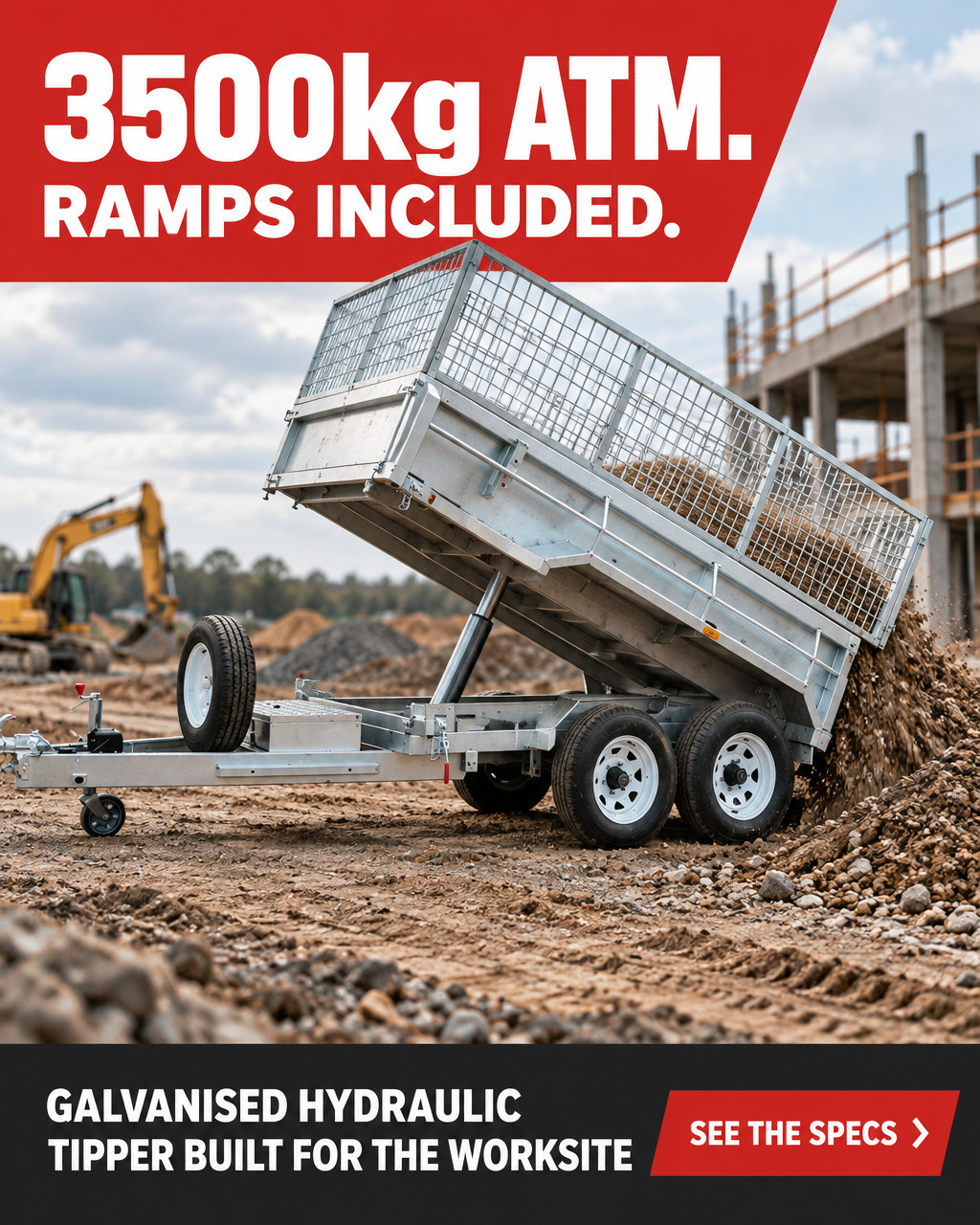
If you have ever spent a Saturday shovelling soil out of a box trailer, you already understand why a hydraulic tipping trailer earns its keep. Instead of unloading by hand, the trailer does the hard work for you: the box lifts and the load slides out the back under its own weight. It is one of the most practical upgrades a tradie, farmer or weekend renovator can make. Here is a plain-English look at how a hydraulic tipping trailer actually works, what jobs it suits best, and how to choose the right size and ATM rating for the way you work.
What is a hydraulic tipping trailer?
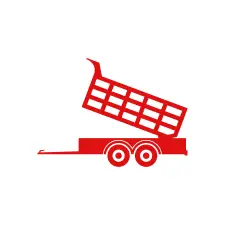
A hydraulic tipping trailer – often called a tipper trailer – is a box trailer with a hinged body and a hydraulic system that raises the front of the box. The rear stays connected to the chassis, so when the body lifts, the floor tilts and the load slides out the tailgate. Because the tipping action is powered by oil pressure rather than your back, a tipper makes short work of loose, heavy or awkward materials that are painful to shovel out of a standard trailer.
How a hydraulic tipping trailer works
The system is simple, robust and proven. Three parts do the job: a pump, a hydraulic ram, and the hinged tipping body.
The pump
The pump creates the oil pressure that drives the system. On most hydraulic tipping trailers it is powered one of two ways. Some run off a 12-volt electric motor drawing from your vehicle’s battery, which you operate with a remote or a switch. Others use a hand pump, where you build pressure manually with a lever. Electric pumps are the popular choice for regular use because you can raise the load without leaving the driver’s seat or breaking a sweat. Both options rely on a small reservoir of hydraulic oil and a valve that lets the oil flow back when the body lowers.
The ram
The ram – also called the hydraulic cylinder – is the muscle of the operation. When pressurised oil enters the cylinder, it pushes a piston that extends and lifts the trailer box. The ram is typically mounted between the chassis and the front of the tipping body, so a relatively short stroke produces a strong, controlled lift. Because the ram raises the load gradually rather than in one jolt, you keep full control of the tipping angle.
The tipping action
To tip, you release the tailgate, then engage the pump. The ram extends, the box hinges upward at the rear and the load slides out under gravity. Once the box is empty, you release the valve and the body lowers back onto the chassis under its own weight. The whole cycle takes a matter of seconds, and because there is no manual lifting, there is far less strain on your body and far less time spent on the tip.
What jobs suit a tipper trailer?
A hydraulic tipping trailer is built for loose and awkward loads. It is the natural choice for soil, gravel, crusher dust, sand, mulch, garden and green waste, and builder’s waste such as broken tiles, offcuts and demolition rubble. Landscapers use them for spreading topsoil; concreters and builders use them for clearing site waste; farmers use them for feed, spoil and material handling. If your work involves moving anything you would otherwise shovel, wheelbarrow or rake out of a trailer, a tipper is the tool that pays for itself.
Sizing and ATM: choosing the right tipper
ATM, tare and payload
ATM stands for Aggregate Trailer Mass – the maximum the trailer can weigh when fully loaded, including the trailer itself. Tare is the trailer’s own unladen weight, and payload is what is left over for your load (ATM minus tare). Understanding these three numbers before you buy keeps you legal and safe, and stops you overloading a trailer that looks bigger than it really is. As a rule, tandem axle tippers carry heavier loads more comfortably than single axle models, while electric brakes are worth having once you are hauling significant weight.
Matching size to the job
Smaller 8×5 tippers around 1,800kg ATM suit the occasional clean-up and lighter site work. Mid-sized 10×5 and 10×6 tippers in the 3,000kg to 3,500kg ATM range are the sweet spot for most tradies, handling soil, gravel and green waste without fuss. If you are regularly moving heavy rubble or working a large property, a 10×6 tipper rated to 4,500kg ATM gives you the payload and the durability to match. Match the trailer to your most demanding common job, not your lightest one.
Why hot-dip galvanised construction matters
Tippers live a hard life. They carry damp soil, wet gravel and abrasive rubble, and they often sit outside. Hot-dip galvanising coats the entire steel body – inside and out, including cut edges and hard-to-reach corners – so rust struggles to get a foothold. On a trailer that is regularly loaded with wet or corrosive material, a fully welded galvanised chassis and body is not a luxury. It is the difference between a tipper that still works hard a decade on and one that is patched and painted every few years.
The King Kong Trailers hydraulic tipper range
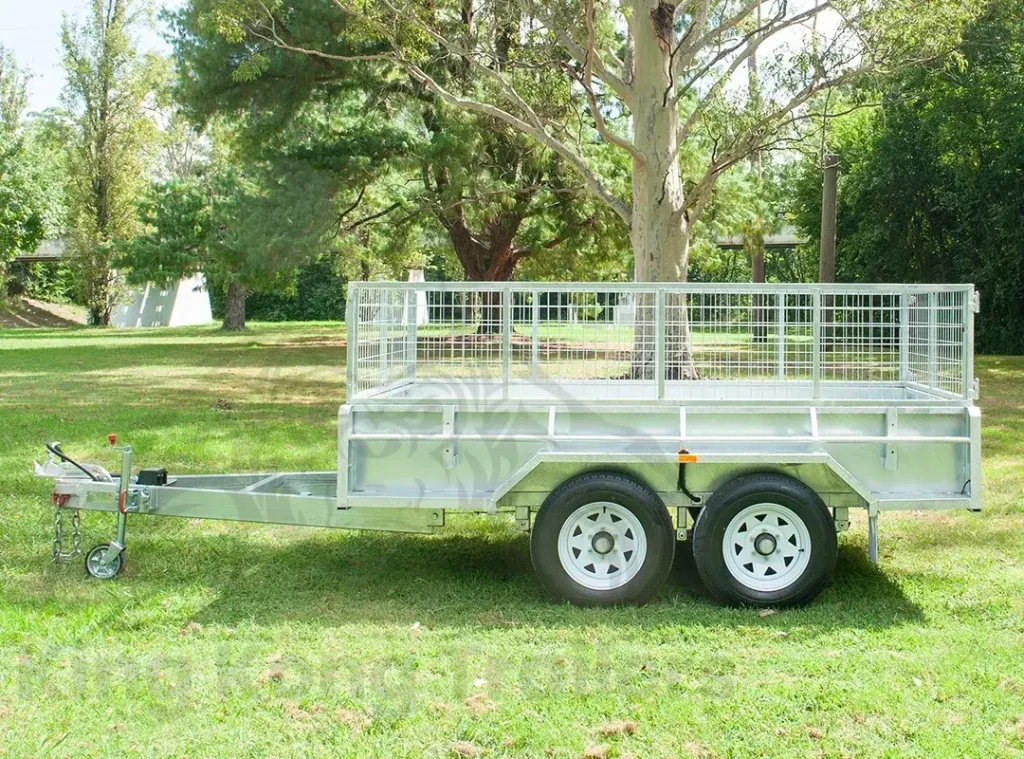
King Kong Trailers builds a hot-dip galvanised hydraulic tipper range to suit most jobs and widths. The 8×5 hydraulic tipper box trailer rated to 1,800kg ATM with electric brakes handles lighter work, while the 10×5 and 10×6 tandem axle tippers in 3,000kg, 3,200kg and 3,500kg ATM ratings cover the everyday tradie workload. For heavy material, the 10×6 tandem axle hydraulic tipper is rated to 4,500kg ATM. Every model uses a fully welded, reinforced galvanised chassis with hydraulic tipping, and most come with aluminium loading ramps and ramp holders. Options such as mesh cages, canvas covers, ladder racks, tool boxes and spare wheels let you set the trailer up around the way you actually work.
Practical tips for safe tipping
Load the trailer evenly and keep the weight toward the front while towing. Before you tip, park on firm, level ground and check that nothing is behind the tailgate. Release the tailgate, raise the body slowly and let gravity do the rest. Never tip on a side slope or soft ground where the trailer could shift, and keep clear of the tipping zone. Lower the body fully before you drive off.
Talk to King Kong Trailers about your next tipper
If you are weighing up whether a hydraulic tipping trailer suits your work, the team at King Kong Trailers can walk you through the sizes, ATM ratings and options that fit your vehicle and your job. Less gimmicks, more true value – and a trailer built to keep working long after the load is gone.