What Does GVM Mean? Trailer & Towing Weights Explained
What GVM means and how it differs from ATM, tare and payload How GVM, GCM and payload limit what you can legally tow Checking your vehicle and trailer weights before you load up
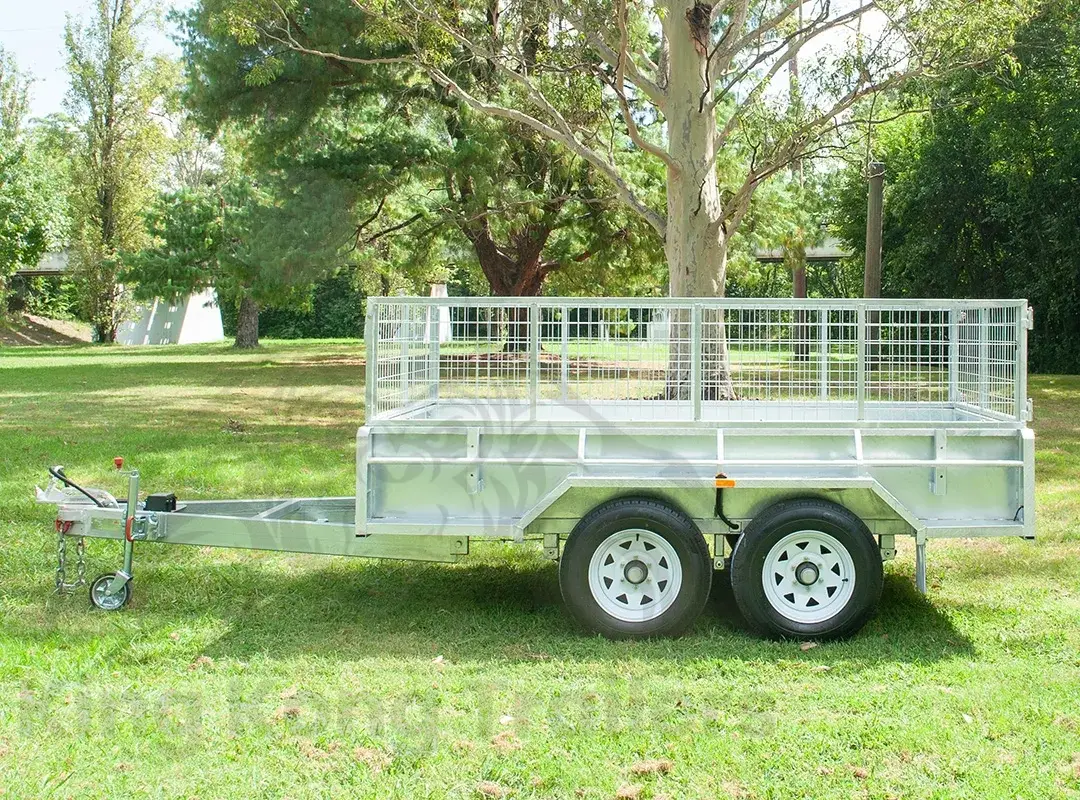
If you have ever stared at a vehicle spec sheet or a trailer compliance plate and wondered what GVM actually stands for, you are in good company. GVM is one of the most searched and most misunderstood terms in Australian towing, and getting it wrong can mean a fine, a rejected insurance claim or a rig that simply should not be on the road. This plain-English guide explains the GVM meaning, how it differs from ATM, tare and payload, and how to check your weights before you hitch up.
What does GVM mean?
GVM stands for Gross Vehicle Mass. It is the maximum weight a vehicle is legally allowed to be when fully loaded – and that includes the vehicle itself plus everything you add to it: passengers, fuel, tools, luggage, dogs and the tow ball weight pushing down from your trailer. Think of GVM as the hard ceiling stamped onto your tow vehicle. Cross it and you are overloaded, no matter how well the trailer itself is rated.
GVM applies to the vehicle doing the towing. It is set by the manufacturer and confirmed on the vehicle’s compliance plate, so it is a fixed number rather than a suggestion. Trailer ratings work differently, which is where most of the confusion starts.
GVM, ATM, tare and payload: what is the difference?
Tare is the unladen weight of a trailer or vehicle, exactly as it comes off the line with no load, no cargo and no fuel beyond what is needed to run. It is the starting point for every other figure.
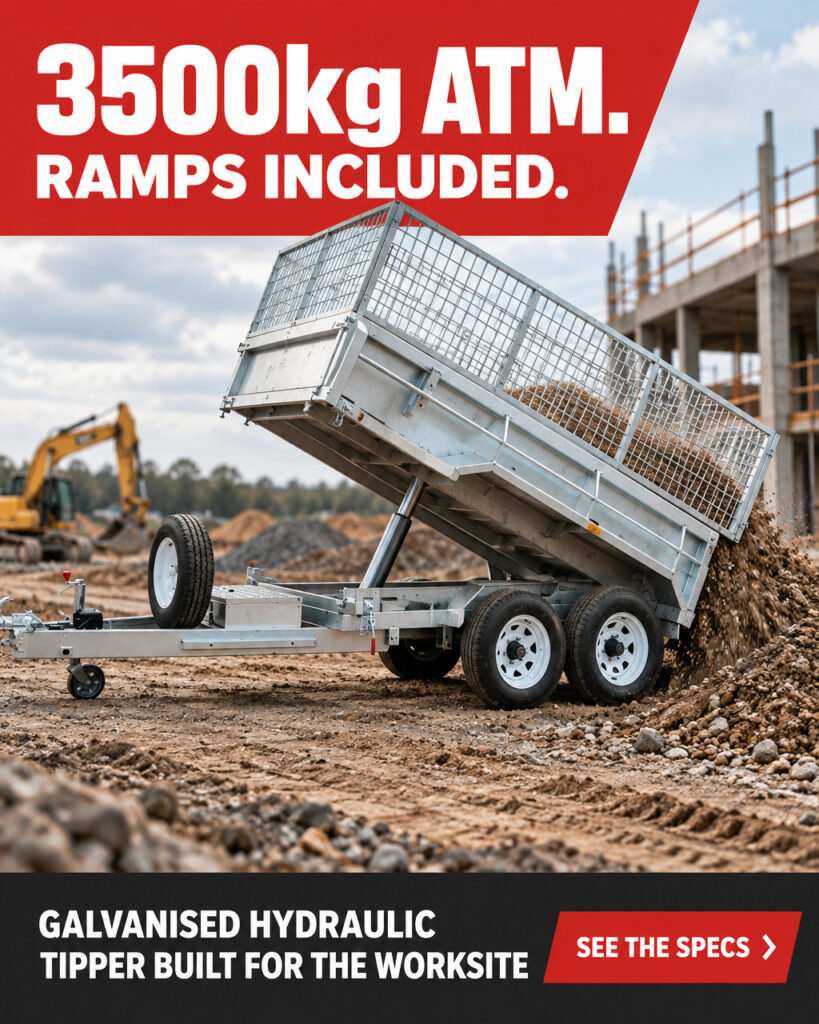
ATM, or Aggregate Trailer Mass, is the maximum total weight of a trailer plus its load, carried through the coupling and the trailer’s own wheels. ATM is the rating you see on our trailers – 750kg, 2000kg, 3500kg or 4500kg ATM – and it is the number to check when you are comparing trailer ATM against the terms on a vehicle spec sheet.
Payload is what is left for your cargo once you take tare away from ATM. A trailer rated to 3500kg ATM with an 820kg tare, for example, gives you roughly 2680kg of payload. Payload is the figure that actually tells you how much you can carry.
GTM, or Gross Trailer Mass, is the weight a trailer carries on its own wheels when it is coupled to the vehicle. It is ATM minus the load transferred onto the tow ball. GCM, or Gross Combination Mass, is the maximum combined weight of the tow vehicle and the trailer together, fully loaded – the overall limit for the whole rig.
How GVM, GCM and payload limit what you can legally tow
The rules stack, and the lowest limit always wins. You cannot exceed your vehicle’s GVM, you cannot exceed the trailer’s ATM, and the two together cannot exceed the vehicle’s GCM. On top of that, the vehicle has its own tow rating and a maximum tow ball download, which is the downward weight the coupling is allowed to place on the ball – usually around 10 per cent of the loaded trailer weight.
Picture a ute with a 3000kg GVM and a 6000kg GCM, towing a 3500kg ATM trailer loaded to 2500kg. The trailer is under its ATM, which is good. But if the ute itself weighs 2400kg with fuel and a tray full of gear, adding roughly 250kg of ball weight pushes it to 2650kg – still under GVM. The combination lands near 5150kg, comfortably inside the 6000kg GCM. Change any one of those numbers and the whole calculation changes with it.
Ball weight is the quiet culprit in most overload stories. Load your trailer too far forward and you can push the vehicle over its GVM even though the trailer itself is fine. Load it too far back and the trailer can sway at speed. Aim for a balanced load with roughly 10 per cent of the loaded trailer weight on the ball.
How to check your weights before you load up
- Read the trailer compliance plate for ATM and tare, and the vehicle placard for GVM, GCM and the manufacturer’s tow rating.\n2. Weigh the tow vehicle and the loaded trailer separately at a public weighbridge – most towns have one and it is cheap insurance.\n3. Add up your real cargo, not an estimate: tools, water tanks, spare wheels, fuel and anything else that rides along.\n4. Check your ball weight with a tow ball scale, then redistribute the load if you are heavy on one end.\n5. Recheck the numbers whenever your load changes, because a rig that was legal last weekend may not be legal this one.
Quick answers to common GVM questions
Is GVM the same as ATM?
No. GVM is the maximum loaded weight of the tow vehicle. ATM is the maximum loaded weight of the trailer, and it is the trailer figure that appears on trailer ATM ratings. They measure two different things on two different pieces of equipment.
Does GVM include my trailer?
No. GVM covers the vehicle only. The combined weight of vehicle and trailer is governed by GCM, which is usually the figure that catches people out when they add a heavy load to both ends.
How much can I legally tow?
Your safe legal limit is the lowest of three things: the vehicle’s tow rating, the trailer’s ATM, and whatever is left under the vehicle’s GCM once the loaded vehicle is accounted for. If any one of them is exceeded, the rig is over the line.
Where do I find my GVM?
Look for the vehicle’s compliance plate or build plate, usually in the engine bay, on a door pillar or under the bonnet. Your owner’s manual and the registration paperwork will list it too.
The bottom line on GVM and towing weights
GVM is simply the maximum your tow vehicle can weigh when fully loaded, and it sits alongside ATM, tare, payload, GTM and GCM as part of one connected set of limits. Understand how they fit together and you can load up with confidence instead of guesswork. When you are choosing a trailer, start with a realistic payload figure and work backwards through your vehicle’s limits.
Every trailer we build carries its ATM and tare clearly on the plate, and our team is happy to talk through the numbers for your vehicle and your work before you buy. Less gimmicks, more true value – and no nasty surprises at the weighbridge.