Galvanised vs Painted Trailers: Which Is Right for Australian Conditions?
Choosing a trailer often comes down to two things: how much it can carry and how well it will hold up. The second question matters more than many buyers expect. In Australia, trailers face coastal salt air, wet winters, dusty summers and the daily knocks of work sites and back roads. The finish on the […]
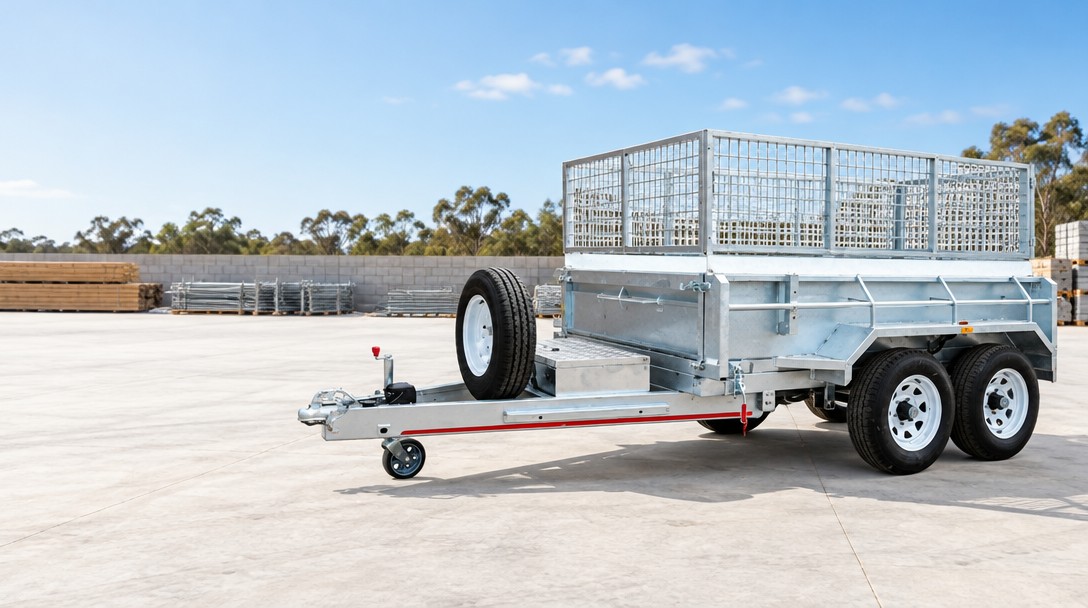
Choosing a trailer often comes down to two things: how much it can carry and how well it will hold up. The second question matters more than many buyers expect. In Australia, trailers face coastal salt air, wet winters, dusty summers and the daily knocks of work sites and back roads. The finish on the frame is one of the best guides to how a trailer will age.
This guide explains the difference between hot-dip galvanised and painted trailers, and how to decide which suits your work.
What Is Hot-Dip Galvanising?
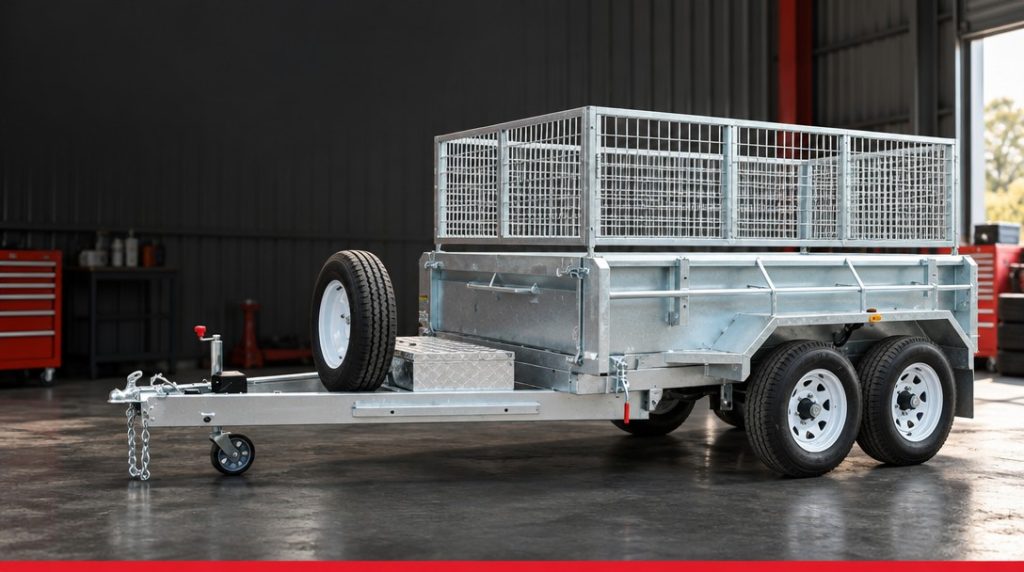
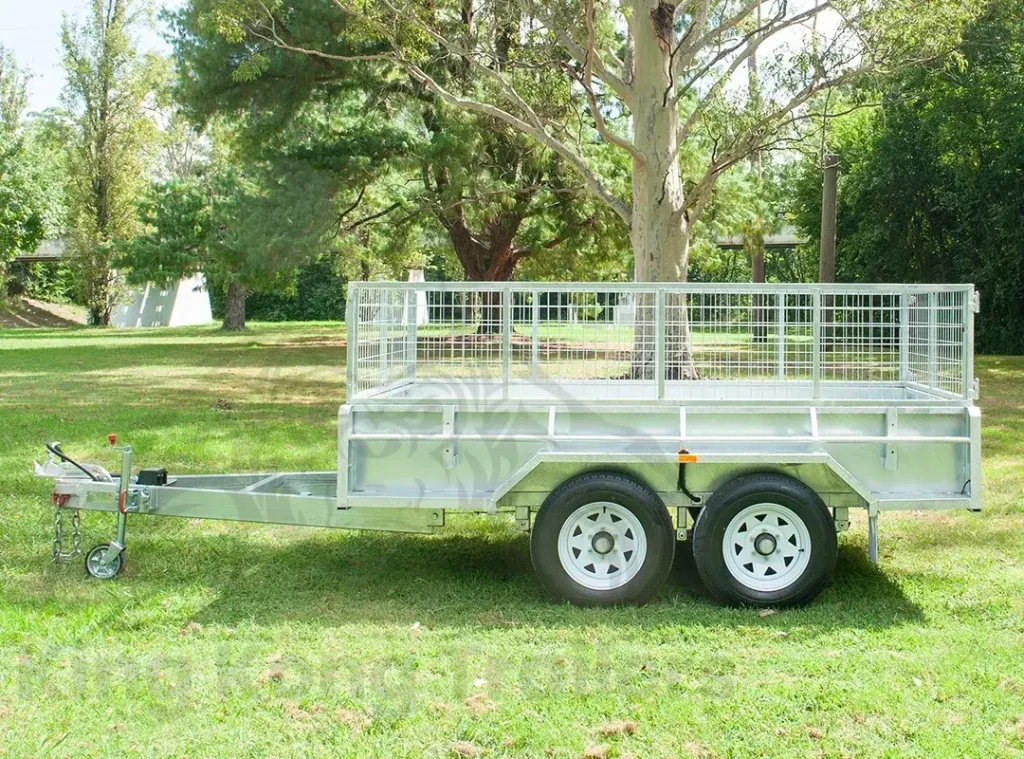
Hot-dip galvanising coats the steel in a layer of zinc by dipping the fabricated frame into a bath of molten zinc. The zinc bonds to the steel, so the protection covers the inside of hollow sections and welds, not just the outside.
That coverage is the main reason galvanised trailers are popular for work that involves wet ground, mud, salt or regular washing. Zinc protects the steel even where the surface is scratched, because it corrodes before the steel underneath does.
What Does a Painted Finish Offer?
Painted trailers are usually lower priced at the point of sale. A good paint system can look sharp and suit a trailer used mainly for light, dry work.
The limitation is the protective layer itself. Paint sits on the surface. Once it is chipped or scratched, moisture can reach bare steel and rust can start underneath, often in places you cannot see without pulling the trailer apart. Regular touch-ups help, but they depend on you spotting the damage early.
Galvanised or Painted: How to Decide
The right finish depends on how you use the trailer. Consider these points:
- Where it lives: Coastal properties, creek crossings and wash-down areas favour galvanised steel.
- How hard it works: Daily loading, tipping and dragging across rough ground put more strain on the finish.
- How long you keep it: If you plan to keep the trailer for many years, corrosion protection matters more.
- How much you will maintain it: Painted trailers need regular checks and touch-ups to stay protected.
- Your budget: Compare the full cost of ownership, not only the purchase price.
For most trade, farm and commercial users, the protection of a hot-dip galvanised finish is worth weighing carefully, even if the upfront price is higher.
Check the Build as Well as the Finish
A galvanised finish does not make a poorly built trailer good. Look at how the chassis and body are fabricated, whether the welds are fully finished, and what the trailer is rated to carry. Compare the ATM, TARE and payload figures, not just the finish. If you are unsure which ATM suits your tow vehicle, our team can walk you through it.
Maintaining Any Trailer
Whichever finish you choose, a little routine care extends its life:
- Wash off salt, mud and chemicals, especially after work near the coast or on wet ground.
- Check the frame, welds and mounting points for chips, cracks or early rust.
- Touch up any scratches promptly so bare steel does not stay exposed.
- Keep bearings, brakes and lights in working order.
The Bottom Line
If your trailer will face wet, salty or heavy use, a hot-dip galvanised finish is the more protective choice. If it will mostly sit under cover and carry light loads, a painted trailer can suit well, provided you check and maintain it. Either way, buy on honest specifications and proven build quality, and talk to a dealer who will tell you plainly what suits your work.
Less gimmicks. More true value.